


The nomination "Responsible for those ...": Alyona Kirusheva was washing birds of toxic substances almost around the clock.
Alyona Kirusheva, a resident of Syktyvkar, is an ecologist by education, and works as the chief expert at the Center for Specially Protected Natural Areas of Komi. It was her love for her profession that played a crucial role in making the decision to go and save the Black Sea coast from great trouble," the BNK news agency writes.
"When the news reported about the wreck of oil tankers, I didn't pay much attention. There was a New Year's rush and work in my head. But then information came about the scale of the disaster: a thick oil slick covered our beloved Anapa beaches, the once golden sandy shores turned into a black viscous mass, birds and dolphins are dying. That's when I joined the volunteer groups," Alyona said.
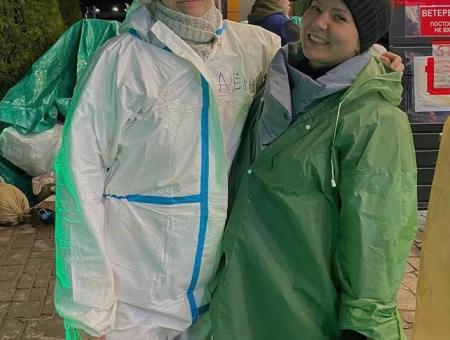
Alyona Kirusheva set off with her friend Victoria Yurkina. Getting to Anapa from Komi is not so easy, you need to fly by plane and train, and tickets were almost impossible to get or too expensive. Therefore, the Northerners went south on a ride, they say, they found it by a miracle.
Initially, the girls planned to clean the beach of fuel oil. They arrived at the place on the afternoon of December 31. But it so happened that this particular headquarters was closed on New Year's Eve. Another headquarters was operating around the clock and without interruptions, where birds were captured and washed.
"There was a catastrophic shortage of workers. We worked almost around the clock, taking a nap break for only a couple of hours. These days were hard, sometimes unbearably exhausting. We also celebrated the New Year at the headquarters. We were only distracted for 5 minutes to hear the chimes and congratulate each other. And into battle again! After all, for birds, especially those dying from fuel oil, every minute is precious," Alyona continues.

The environmental disaster in the Black Sea occurred in mid-December 2024, when fuel oil tankers crashed in the Kerch Strait. As a result, about 2,4 thousand tons of fuel oil got into the sea. Volunteers came here to help local residents rescue animals and birds, and clean beaches from all over the country.
"The moment we arrived at the place; the tears couldn't be held back. It's scary. When you see that a bird is suffering and may die from the consequences of a disaster, it's hard. It was important to gather strength, cope with emotions and act," Alyona said.
It was necessary to catch birds at night, because it is in the dark that they are easier to catch, they appear more often on the shore. The situation was complicated by the weather conditions, it was getting cold and the birds could die even before they could receive any help.

The headquarters was located in a car wash. Its owner stopped operations and gave the premises to volunteers. One compartment was engaged in the primary washing of birds: beak, eyes, neck, stomach. In the second case, after sealing the beak, the body was washed. The third is a nursing home. The birds had to be fed and watered by the hour, their bedding changed, and their body temperature monitored.
"There were veterinarians among us, who often worked around the clock, as there were few such specialists. After capturing the bird, it was necessary to carry out all the necessary manipulations during the first two hours to ensure that it could eat and drink water normally. The birds were washed with household chemicals, this method was suggested by other volunteers who participated in similar liquidations. There was no clear schedule, because of the lack of people, shifts could last for 12 hours," Alyona Kirusheva shares her memories.

The volunteers mostly got loons and grebes. When washing, it was important not to damage the birds' paws and body. Moreover, the volunteers had to observe safety measures: wear suits, masks and glasses. They were given all this at headquarters. But Alyona and Victoria bought the medicines themselves, and friends, relatives, and colleagues provided financial assistance. They stayed at the spill for a week, but they could not avoid intoxication. Alyona inhaled the fumes from the fuel oil, although she was wearing protective equipment.
"After we talked about our work, many of our friends went to Anapa as volunteers. This is an example for me - to be a friend to every person in the environment, to be responsive and help when you can," said Alyona.
Photos of BNK News Agency.