

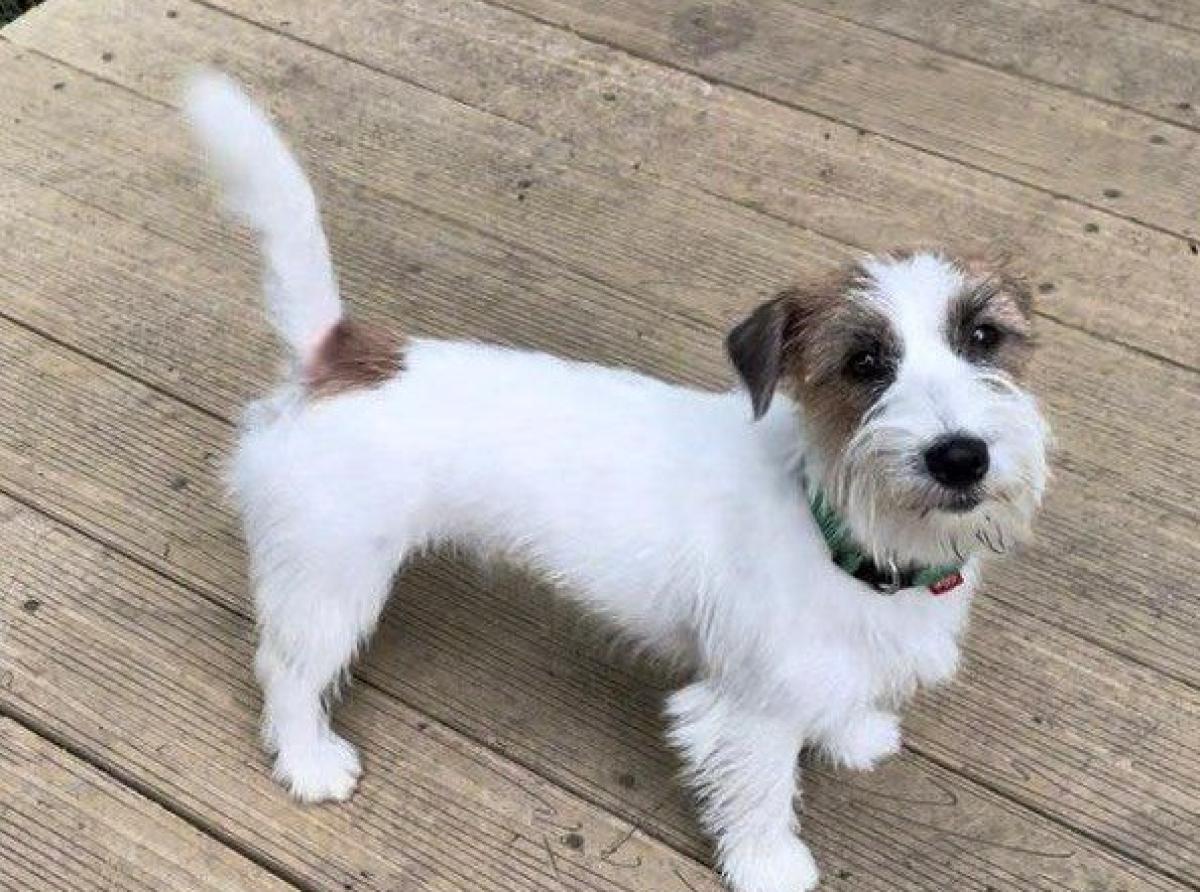
"Our Brothers" nomination: In the Barents Sea, scientists conducted a unique experiment to search for whales with the help of a dog.
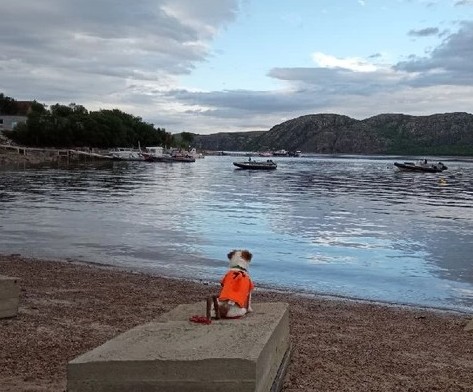
A year ago, specialists from the Severtsov Institute of Ecology and Evolution of the Russian Academy of Sciences and the Nature and People Foundation launched an unusual project using Russia's first whale biodetector dog, KP –Murmansk writes. The name of the little dog is Zhuzha.
A tiny Jack Russell Terrier puppy was born to Julia Ganitskaya, a junior researcher at the Institute, at the age of six months. It was then that the scientists decided on a unique experiment for Russia. Put a dog on a yacht and go in search of sea giants.
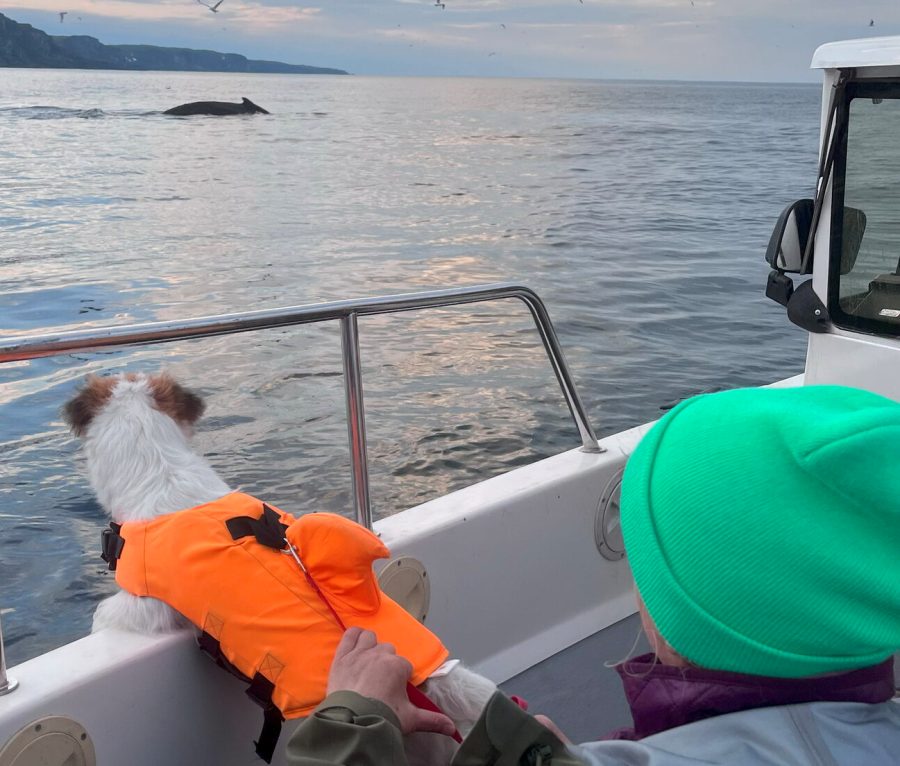
Zhuzha went on her first expedition a year ago. We sailed after Bowhead whales in the Sea of Okhotsk. According to scientists, the four-legged biodetector showed excellent endurance: Zhuzha steadfastly endured the pitching, quickly adapted to life on the ship and began to show a real "nose" for whales. However, first she "smelled" the porpoises. The dog's reaction amazed everyone. Zhuzha was ready to jump into the abyss after the sea creatures.
In 2025, work continued on the Kola Peninsula, namely in the famous Teriberka, on the coast of the Barents Sea. There are red book humpback whales, Minke whales, killer whales, and porpoises. The team went to sea five times, and each time Zhuzha demonstrated excellent "nose job".
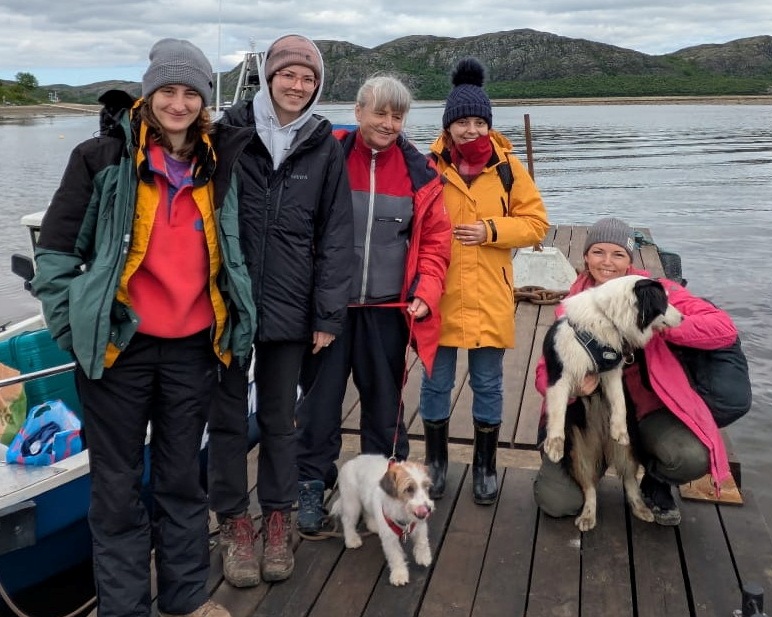
We were pleasantly surprised that our little colleague did not lose her skill over the course of a year: on the very first day, she showed a very good reaction and immediately "made a stand" when approaching the whales, despite the strong pitching and lack of visual contact," said Yulia Ganitskaya, a junior researcher at the IPEE RAS.
The dog literally works "like a device," explains the scientist. While the ship is sailing on the water, she stands at the stern, sniffing. A handler, a specialist who trains dogs, monitors the direction of her head, reaction, and behavior. This is how the team understands where to look for whales.
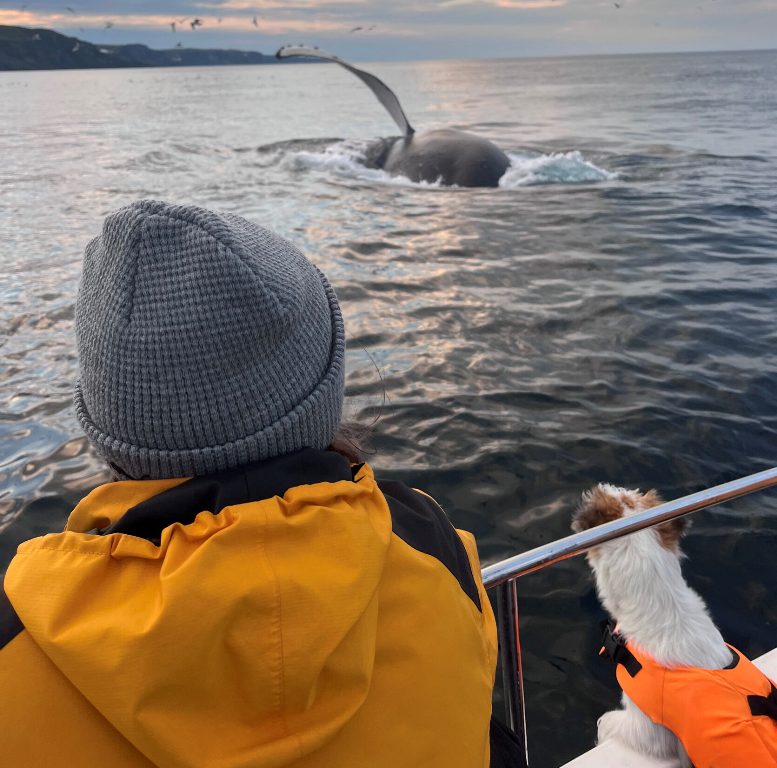
"The biodetector dog is a live navigator. And we're just reading her reaction. Later, we managed to show Zhuzha different marine mammals, and she actively reacted to each of them, showing that she recognizes the smell," says Zhuzha's hostess.
Zhuzha has a very important scientific mission: to help researchers study rare marine mammals. This is the first time such an experiment has been conducted in Russia.
"Whales breathe by spewing air and water like a fountain through their blowhole. It is this "cocktail" that dogs pick up. No odor-soaked rags are needed. Four-legged friends also react to whale footprints. It's enough just to go to the place where the whales live and show the animal to the dog," explains Julia Ganitskaya.
"The biodetector dog is a live navigator. And we're just reading her reaction. Later, we managed to show Zhuzha different marine mammals, and she actively reacted to each of them, showing that she recognizes the smell," says Zhuzha's hostess.
Zhuzha has a very important scientific mission: to help researchers study rare marine mammals. This is the first time such an experiment has been conducted in Russia.
"Whales breathe by spewing air and water like a fountain through their blowhole. It is this "cocktail" that dogs pick up. No odor-soaked rags are needed. Four-legged friends also react to whale footprints. It's enough just to go to the place where the whales live and show the animal to the dog," explains Julia Ganitskaya.