
Nomination "Responsible for those”: Ekaterina Romenskaya doesn't just treat animals—she learns to hear those who cannot complain with words and protects everyone who needs help.
The morning of Kaliningrad Zoo veterinarian Ekaterina Romenskaya begins not with coffee in her office, but with her usual visit to the enclosures of the wolves Vesta and Veles. On the way there and back, she conducts a careful round of the grounds and examines the animals. It is crucial to ask the zookeepers how the night went, observe the gait, gaze, and mood of her charges, and notice in time what an animal cannot say out loud. In this profession, there are no patient complaints typical of human medicine—only quiet trust that has to be earned every single day.
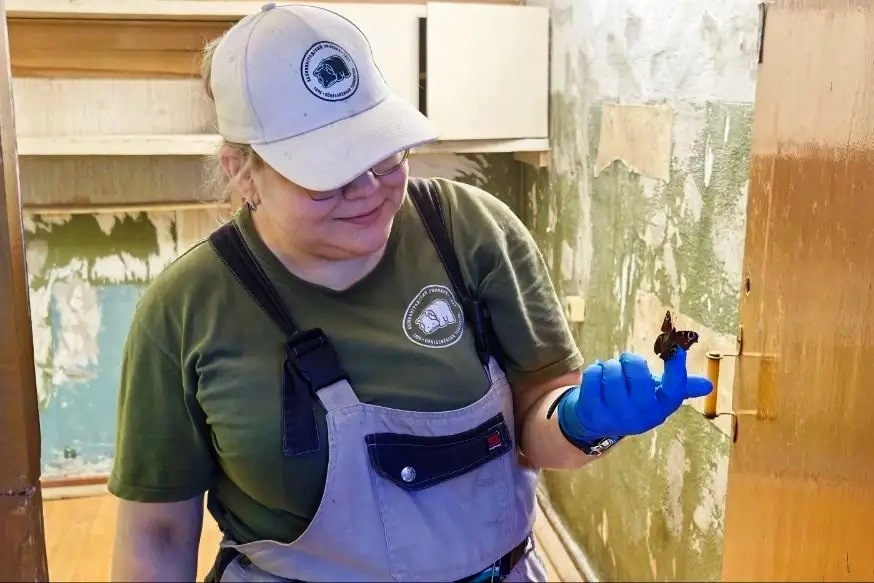
For Ekaterina, there is no difference between a rare zoo inhabitant, a forest guest that has wandered into the city, or a shivering stray kitten. Her love for animals is literally in her blood. When she was born, her parents were still studying at the veterinary faculty. Some of her lullabies sounded like lectures on internal medicine: little Katya would fall asleep in the students' arms while they studied for classes and read their notes aloud. By the age of three, she was already accompanying her mother to the veterinary laboratory and her father on farm calls to see dairy cows. Almost all of her childhood toys were animals, and every single one inevitably had bandaged paws, ears, or heads.
"I treated all of them, fed them something, and made sure they got better," the young woman recalls.
However, her path into the profession was not a direct one. After high school, Ekaterina became fascinated with fundamental science and studied for four years in the Department of Biophysics at Voronezh State University. Yet at some point, she realized she wanted more than just to study nature in theory—she wanted to help it with her own hands and physically interact with it every day. She withdrew her documents and enrolled as a freshman in the Faculty of Veterinary Medicine at Belgorod State Agricultural University. Her parents initially tried to talk her out of it, knowing how grueling and challenging the work is. Still, the five years of study flew by like a single day.
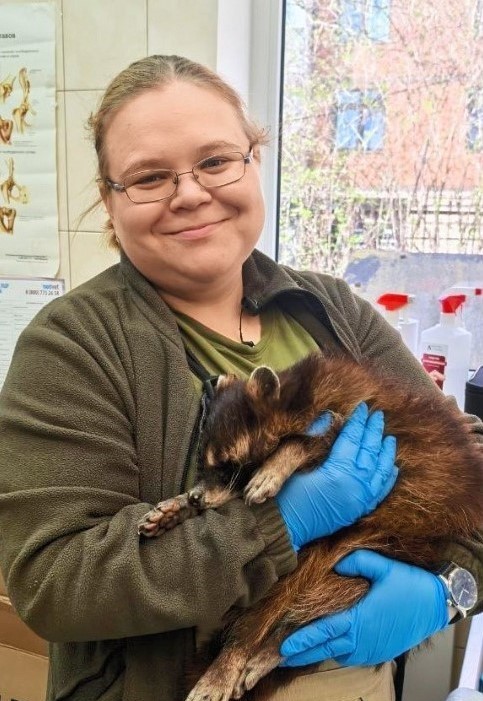
"For me, a veterinarian is someone who learns to understand their patients not through complaints or the owners' words, but through the animal's gaze—reading their thoughts and feelings directly. What warms my heart in my work is watching an animal that was feeling unwell and groaning in pain just yesterday start running around, eating, and looking at you with bright eyes. And you realize that you haven't spent this day, this week, this month, or this year in vain," the veterinarian emphasizes.
Ekaterina moved to the Kaliningrad Oblast from Belgorod several years ago—and immediately fell in love with a region filled with so many stables and horses, having practiced equestrian sports in her youth. Now her life is inextricably linked with the country's westernmost zoo.
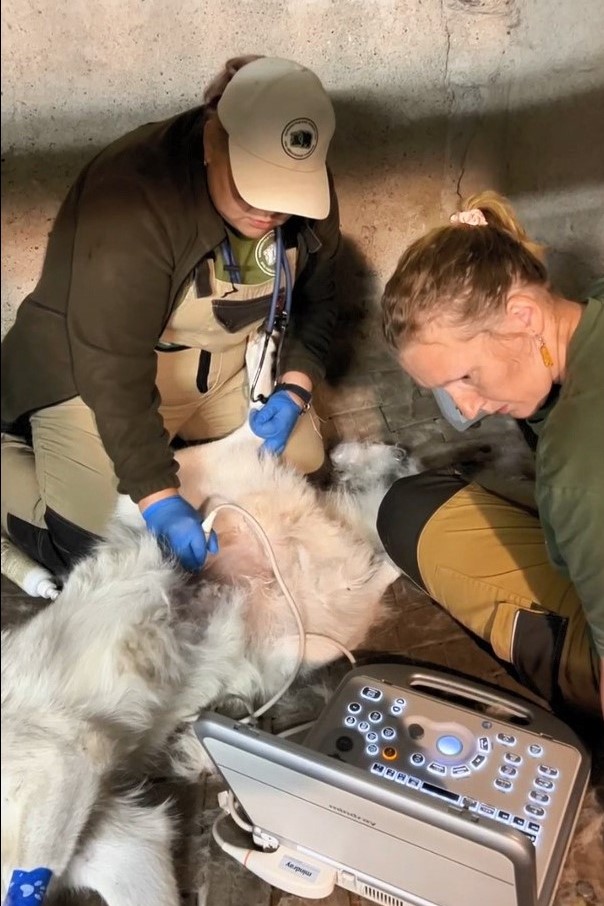
Daily life here is rarely predictable. She even has to perform complex surgeries—such as saving the young wolf Veles, who accidentally swallowed his own toy—and act as a family peacemaker. A pair of lions, Tigran and Leya, cause quite a bit of trouble. The male has a difficult past and a lack of socialization, which means he still doesn't quite understand how to behave around ladies; as a result, after their stormy domestic disputes, she has to heal their wounds—most often the lioness's.
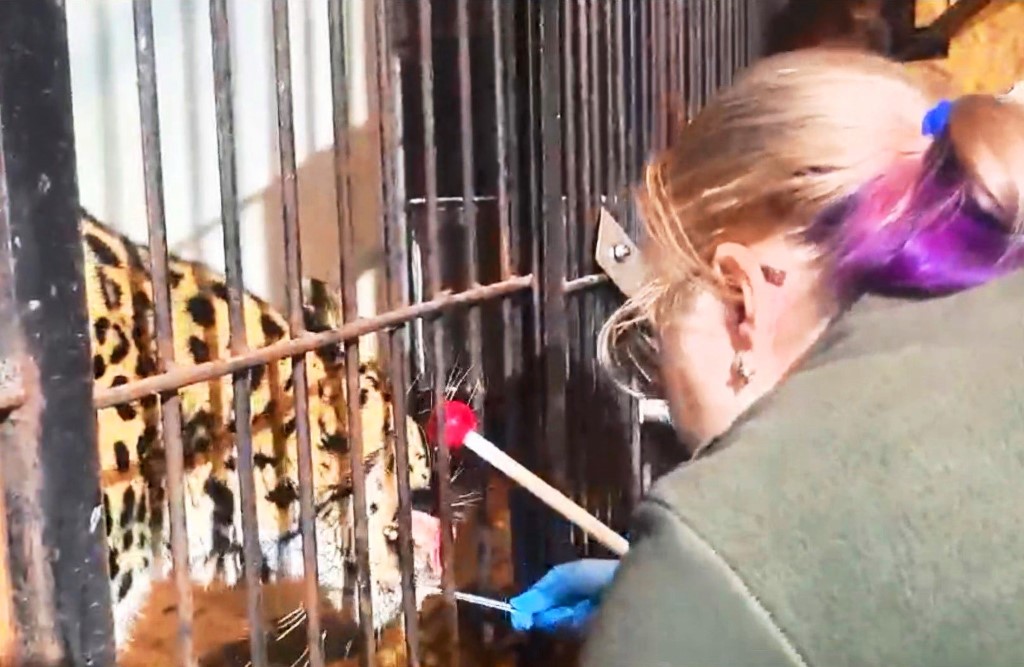
Ekaterina’s arsenal also includes blowpipes, a specialized dart pistol, and a scoped rifle, reports Novy Kaliningrad. Remote tranquilizer delivery is indispensable at the zoo: examining or vaccinating skittish mountain ungulates would be impossible without gently putting them into a medically induced sleep. Ekaterina fired her first dart in Kaliningrad at Bogdan the bison—the elderly giant urgently needed a large dose of painkillers at the time.
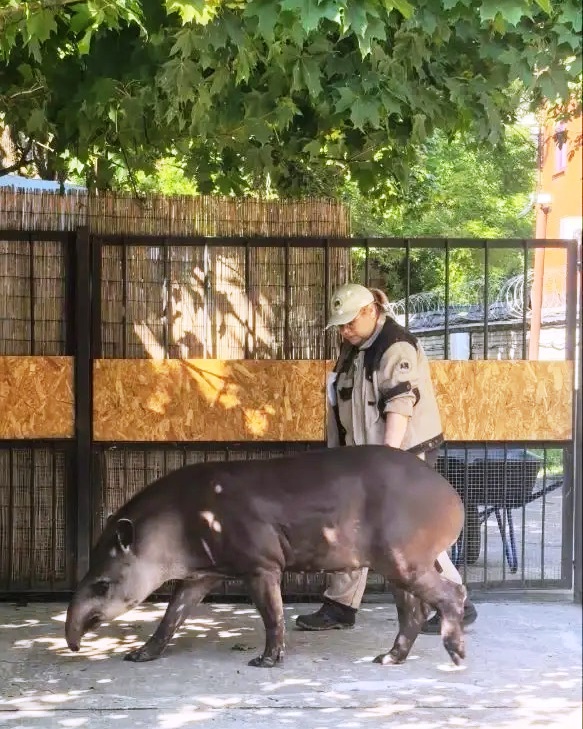
Yet working without syringes and darts brings her particular joy: in her free moments, Ekaterina tries to attend training sessions with the tapirs, seals, primates, and the giraffe so she can interact with each of them as much as possible in a calm and familiar setting.
"I genuinely try to find an individual approach to every animal, to understand its character, habits, and quirks. And to make sure the animal doesn't fear me as an evil doctor with needles, dart guns, and darts, but sees me as someone who wants to help with all their heart," she explains.
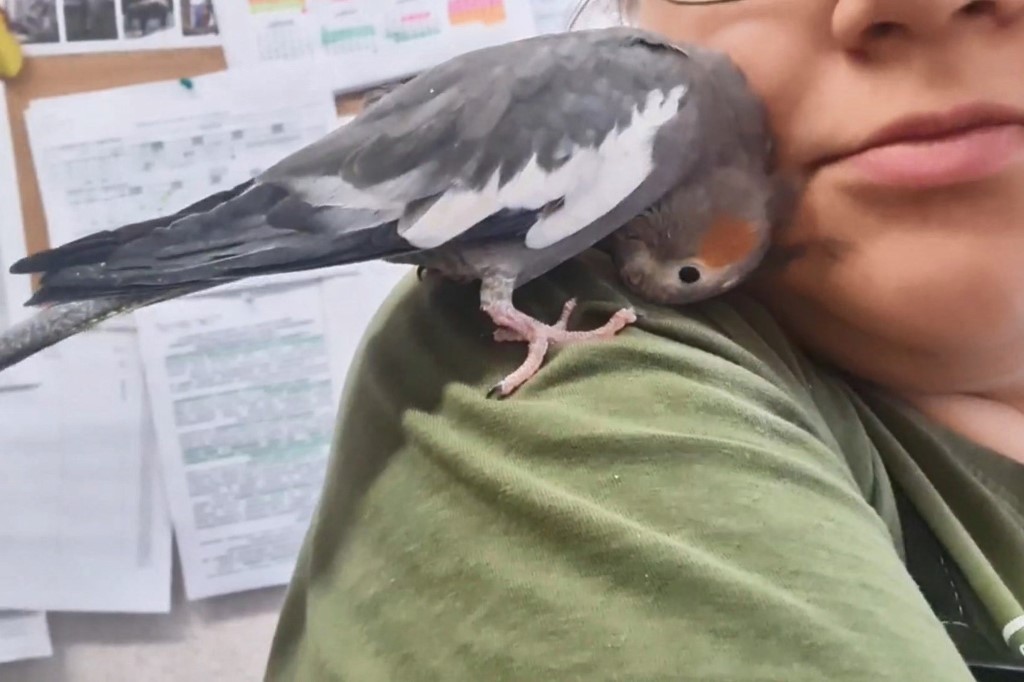
However, Ekaterina admits that even with the most sincere dedication, the hardest situations for her to bear are when it is impossible to help a patient due to objective…
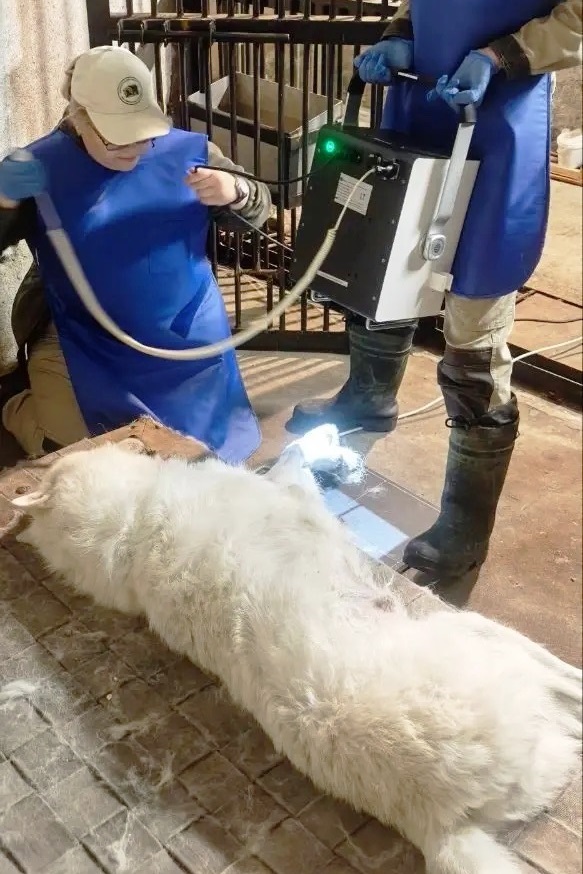
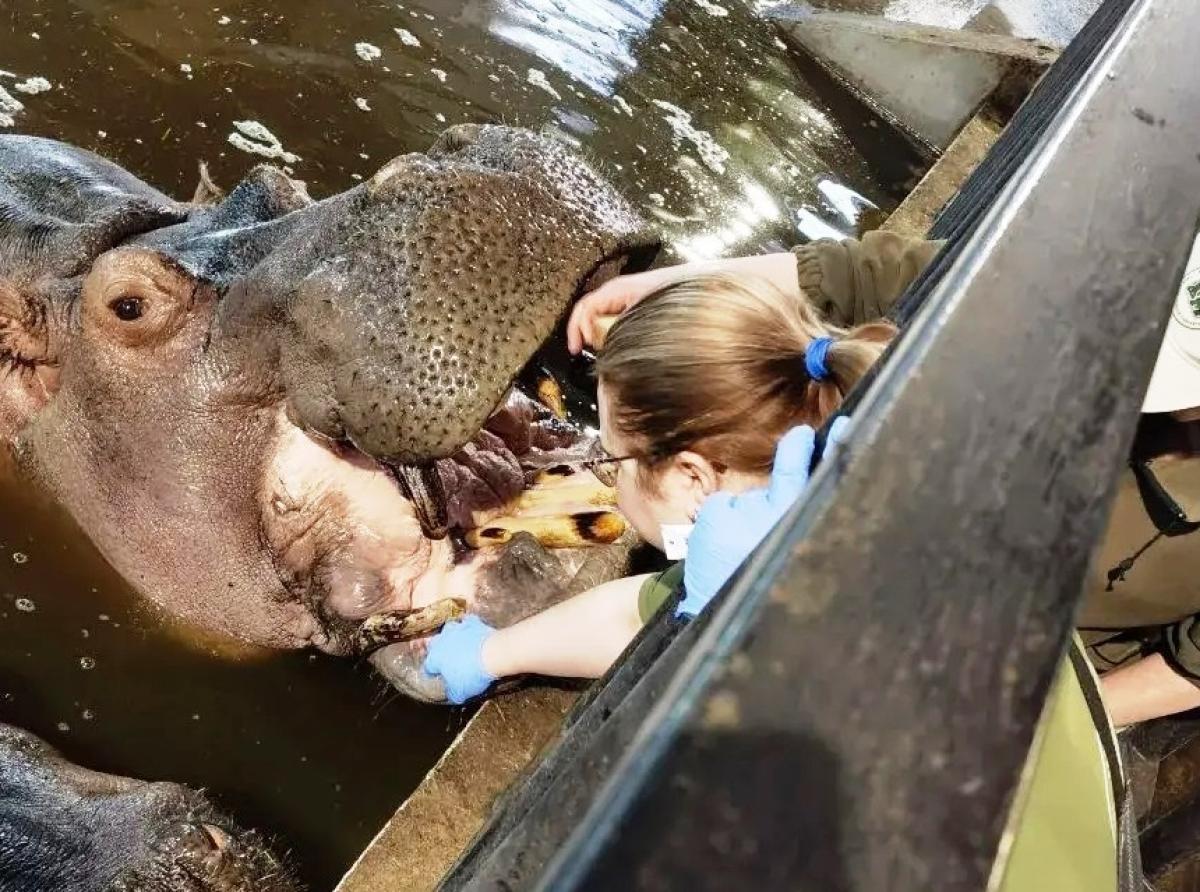
"For example, if a hippopotamus gets sick, it is simply physically impossible to examine it properly—there is no X-ray machine capable of scanning it, and no ultrasound scanner that can penetrate such thick skin. So you realize that no matter how hard you push yourself, your efforts might not yield results," the doctor notes.
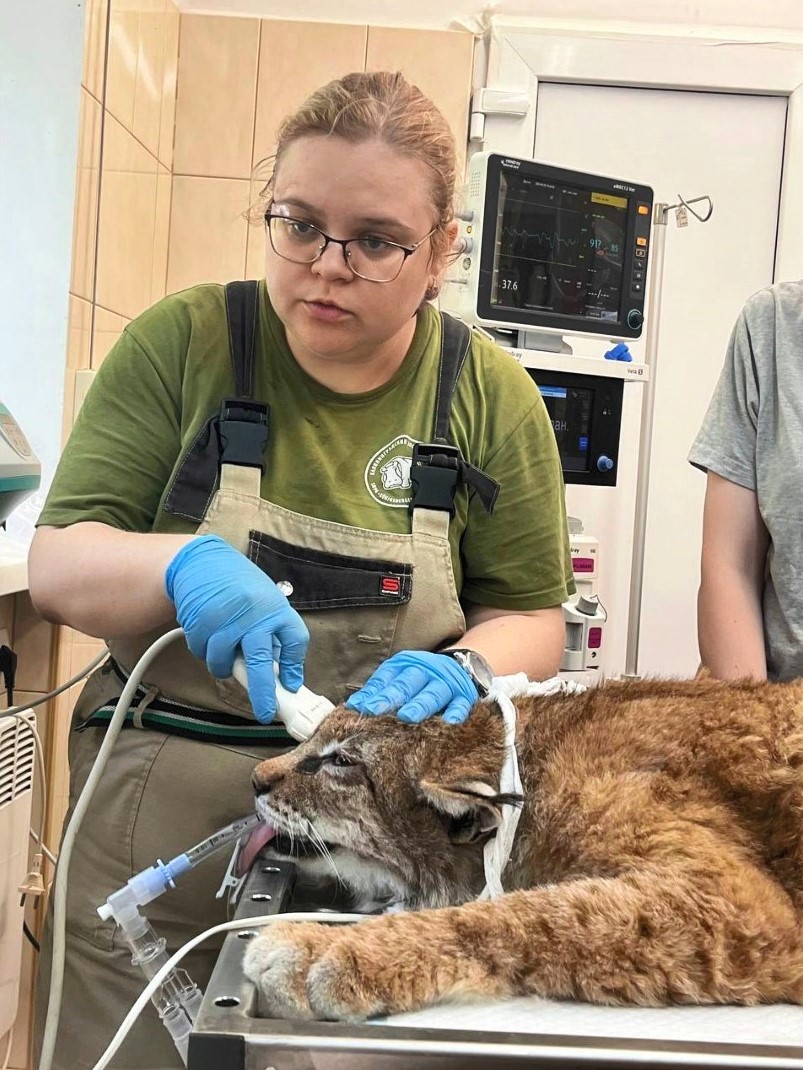
Sometimes the veterinarian's help is needed far beyond the zoo—only here do they have the specialized medications and experience required to work with large wild animals. Ekaterina has already saved three moose.
The first incident happened in May 2025, when a young moose was "strolling" near the Yuzhny (South) Railway Station. In the autumn of that same year, help was needed for a full-grown, 200-kilogram moose that decided to go traveling—near the Russian-Polish border, the animal got its antlers tangled in a cable, cut itself on barbed wire, and became trapped in the wires. Border guards had to carry the giant—sedated by Ekaterina—by hand along narrow trails away from the fences. While the patient slept, the doctors treated his wounds and kept a long watch to make sure the animal woke up safely and headed into the woods, far away from the state border.
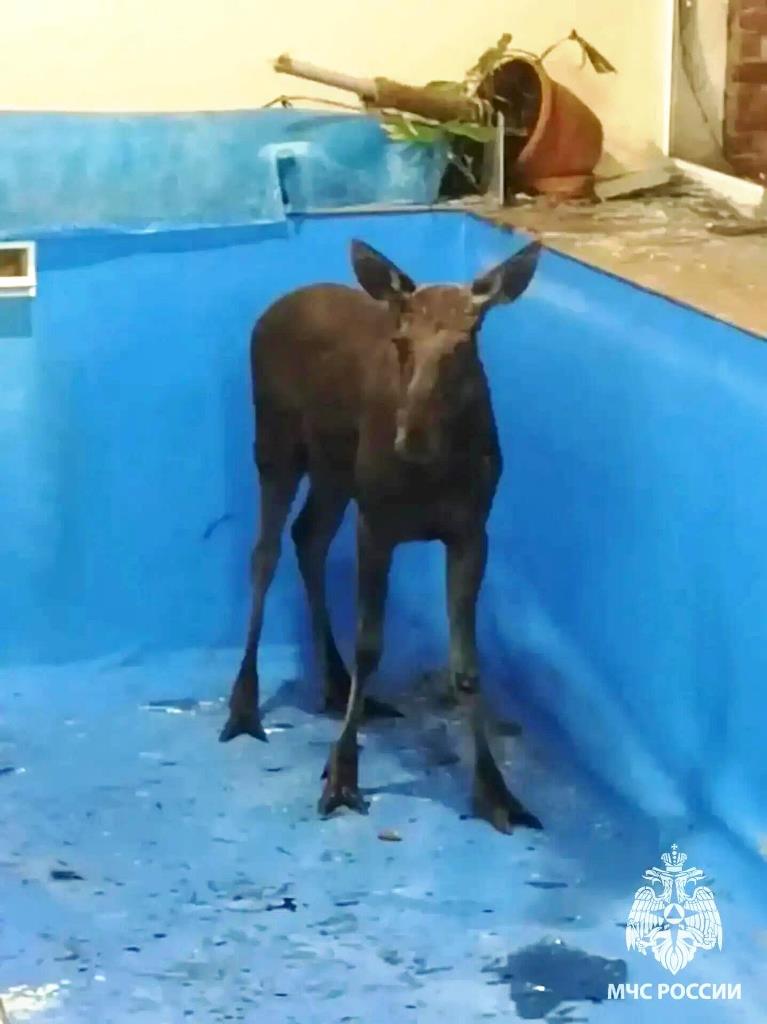
And on May 10, 2026, an unusual call came in: on Vozdushnaya Street, a young moose crashed through a panoramic window of a private house and fell into an empty swimming pool. The alert from the Ministry of Emergency Situations (EMERCOM) and the Ministry of Natural Resources was relayed to the zoo director, Svetlana Sokolova, and Ekaterina was dispatched to the scene.
Rescuers assumed the forest guest couldn't get out of the trap on its own. However, the veterinarian realized right away that the strength and length of the moose's legs easily allowed it to jump out; it was simply terrified, disoriented, and chose to lie low in a quiet spot. There were cuts from broken glass on its hide, though fortunately, they were shallow.
The rescue operation required extreme caution and coordination from everyone involved. The dose of tranquilizer had to be estimated "by eye," since the actual weight of the wild animal was unknown. On top of that, the crowd of onlookers gathered around had to be kept safe.
"After being hit by a dart, an animal doesn't drop dead like they show in movies; on the contrary, it gets agitated and tries either to flee or to attack the offender," Ekaterina explains. "I fired from the side of the broken window, so the moose bolted in the opposite direction: it effortlessly jumped out of the pool onto 'dry land,' couldn't find a way out, turned around, and climbed back down to the bottom of the pool. Ten to fifteen minutes later, it peacefully lay down there and fell asleep.”
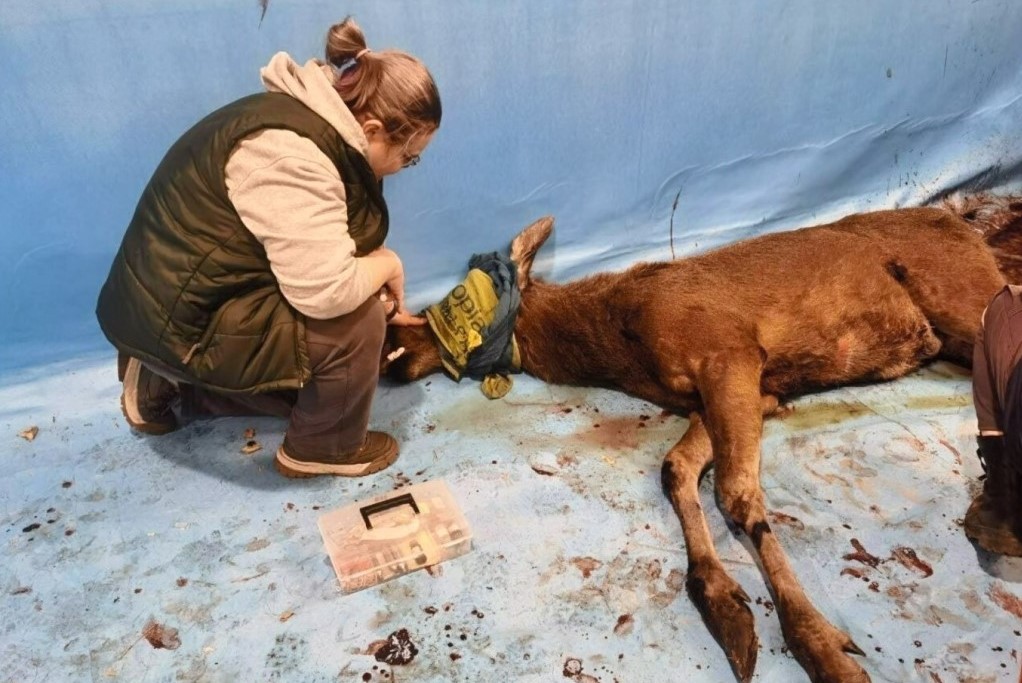
The patient was examined right away, his cuts were treated, and medications were administered to speed up healing. Next came a new challenge: how to lift a sleeping giant weighing roughly 150 kilograms? Heavy equipment couldn't drive inside the house, and rolling the animal onto its back was strictly out of the question—even though pulling him out by his long legs would have been much easier. In the end, fire hoses were slid underneath the body: one group of rescuers pulled on these makeshift slings from above, while another lifted and supported the moose from below.
The forest giant was loaded into a vehicle and driven out to the woods. He slept soundly the entire way, only cracking his eyes open for a second during unloading. Out in nature, the restraints were removed, and he was given a drug for a gentle, controlled awakening.
"I stayed on watch beside him until dawn—monitoring his head position, breathing, and temperature to make sure he didn't take a turn for the worse in his sleep—and in the morning, wildlife protection officers relieved me," the doctor recalls. "We stayed in touch until the moose had completely come to his senses and went off about his moose business.”
As the Kaliningrad native explained, both "May" animals—last year's and this year's—had most likely recently separated from their mothers and accidentally wandered into the city while searching for a new habitat.
Ekaterina has always had four-legged pets: since childhood, her family had cats and a land tortoise. Today, two charming fluffballs eagerly await her return from work at home—her cats, Khorne and Shaitan.
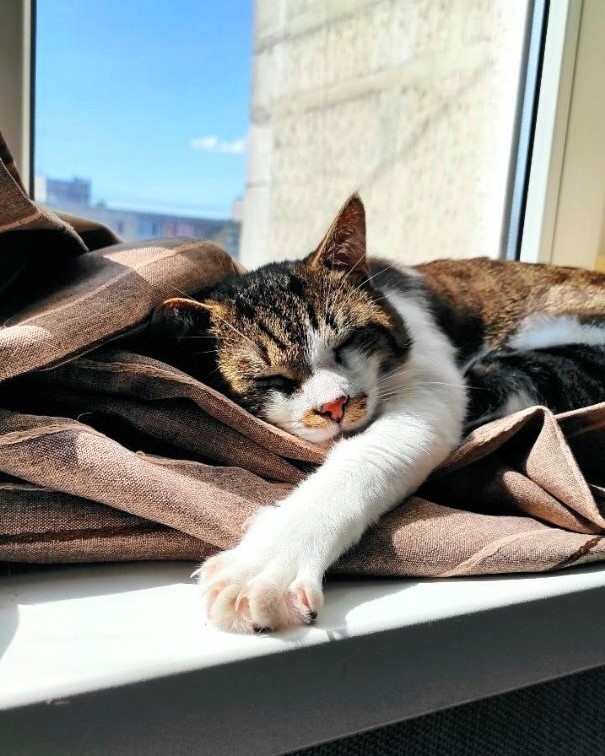
Her boyfriend picked up the older one back in 2017 as a tiny kitten outside an apartment entrance. As for the younger one, Shaitan, he is a zoo "alumnus." In May 2026, right on the institution's anniversary, two three-week-old kittens with infected eyes were found near the lion enclosure. Ekaterina and her colleagues bottle-fed and nursed the little ones back to health in the veterinary unit, and a month later, the whiskered striped rascal moved to a new home—under Khorne's wing.
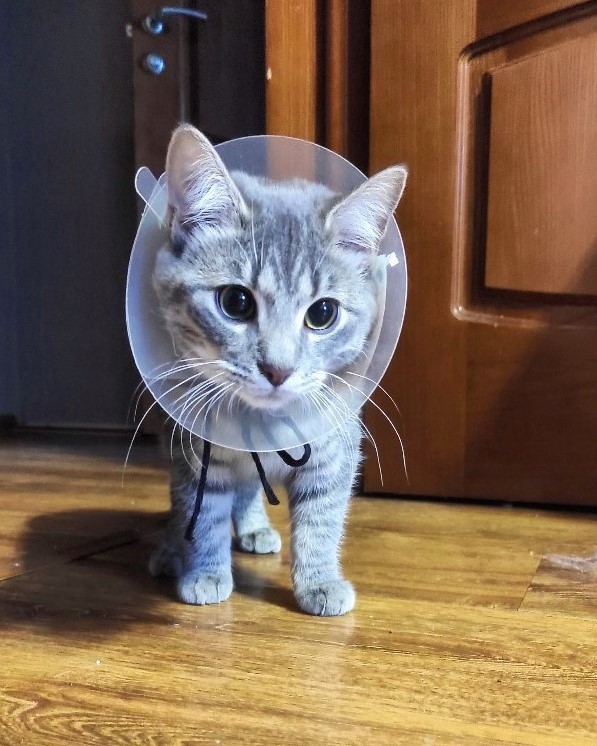
"It is very difficult to combine being a kind 'mommy' who wants to scoop up the little kitten in her arms and comfort it, and a doctor who knows that right now she has to give it a painful shot in the bottom, because otherwise things will get very, very bad. It creates a kind of cognitive dissonance, yet professionalism still wins out: first I treat the animal, and only afterward do I pick it up and comfort it," Ekaterina emphasizes.
Incidentally, caring for stray cats at the zoo has long been a cherished tradition. When several cats gave birth in the utility yard at once last year, the staff didn't abandon a single one: all the animals were treated, vaccinated, and spayed or neutered. Some were adopted into homes, while the rest were officially "employed"—assigned to different departments, issued veterinary passports, given collars, and put on a food allowance.
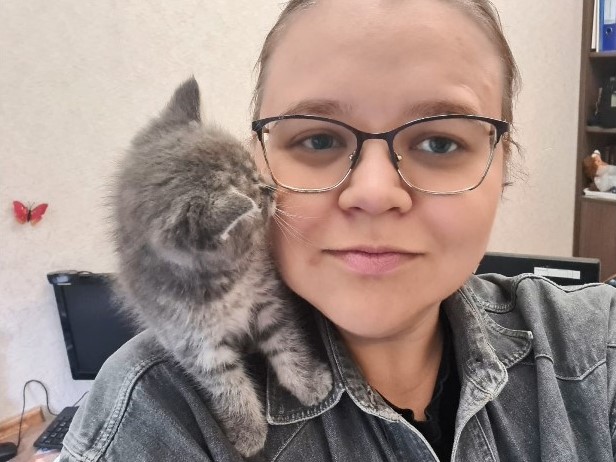
In Ekaterina Romenskaya herself, the deep fundamental knowledge of a biophysicist, the courage and composure of a field doctor, and boundless love and tenderness for all living things are woven together in an extraordinary way. Perhaps this rare combination holds the true secret to her calling: making a tough medical decision in time to save a life, and then always offering comfort and warmth—if not with her hands, then with the kind, understanding gaze through which she communicates with every single one of her patients.
Photos from the archives of the Kaliningrad Zoo, Ekaterina Romenskaya, and the Main Directorate of the Ministry of Emergency Situations (EMERCOM) for the Kaliningrad Oblast.