

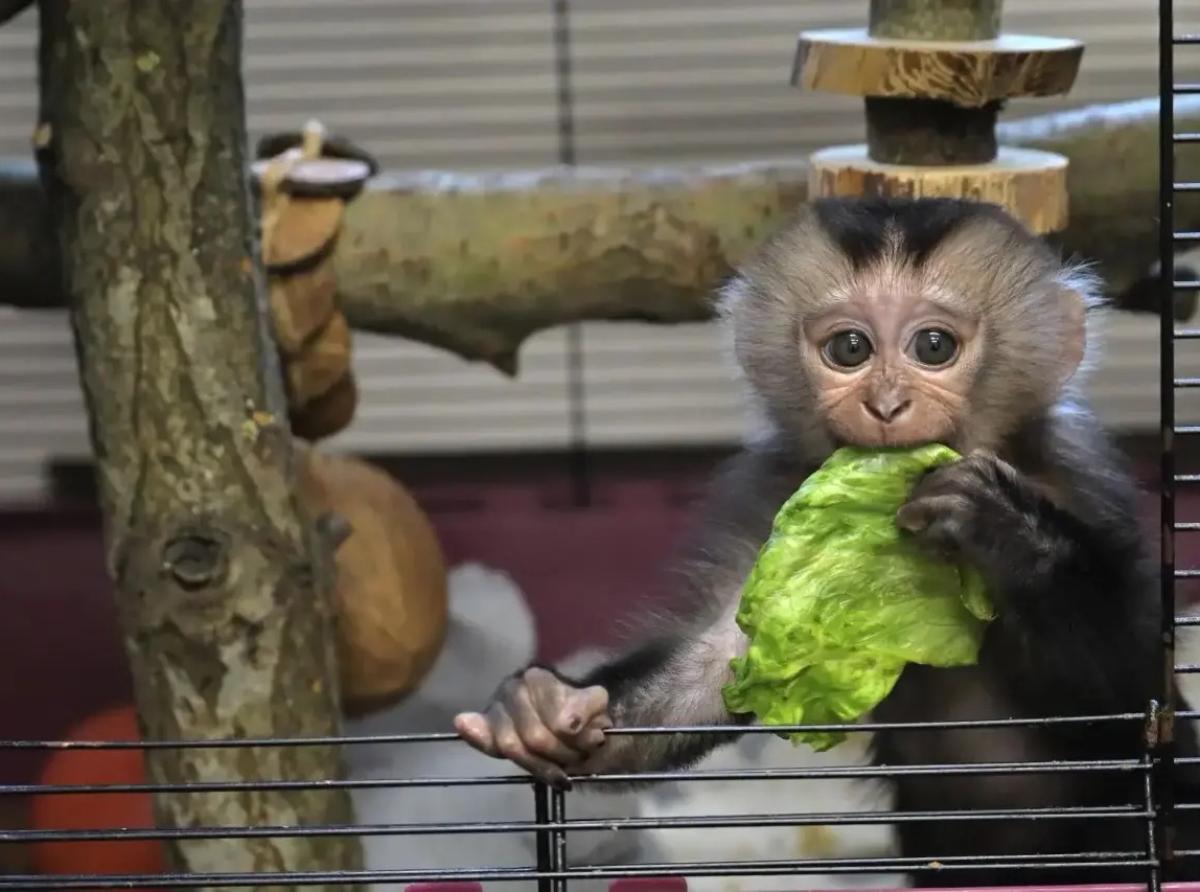
"Responsible for those" nomination: keepers at the Leningrad Zoo are nurturing a tiny, endangered lion-tailed macaque rejected by her mother, and are adapting her for a return to her family group
Orphaned babies appear in zoos everywhere: their mothers may die during childbirth or refuse to nurse them. In the wild, there is only one outcome—such little ones perish. But in zoos, humans temporarily step in as foster parents.
The touching story of Jaya the macaque began late last year, on December 22, when a tiny lion-tailed macaque was born at the Leningrad Zoo. This is one of the rarest macaque species, listed in the Red Data Book. There are only about three thousand of these animals left in the wild worldwide, and around five hundred in zoos. Besides this little one, four adult lion-tailed macaques live at the Leningrad Zoo.
The baby monkey was born to a low-ranking and highly inexperienced female. Two days later, the staff noticed that the newborn's grandmother had stepped in to care for her. Macaques have a strict hierarchy, which caused the mother to stop nursing the baby. An urgent intervention was needed. Keepers removed the infant from the macaque family and spent two weeks carrying her day and night, keeping her warm and bottle-feeding her. At the same time, it was crucial for the staff nursing the little one not to let her become human-imprinted.
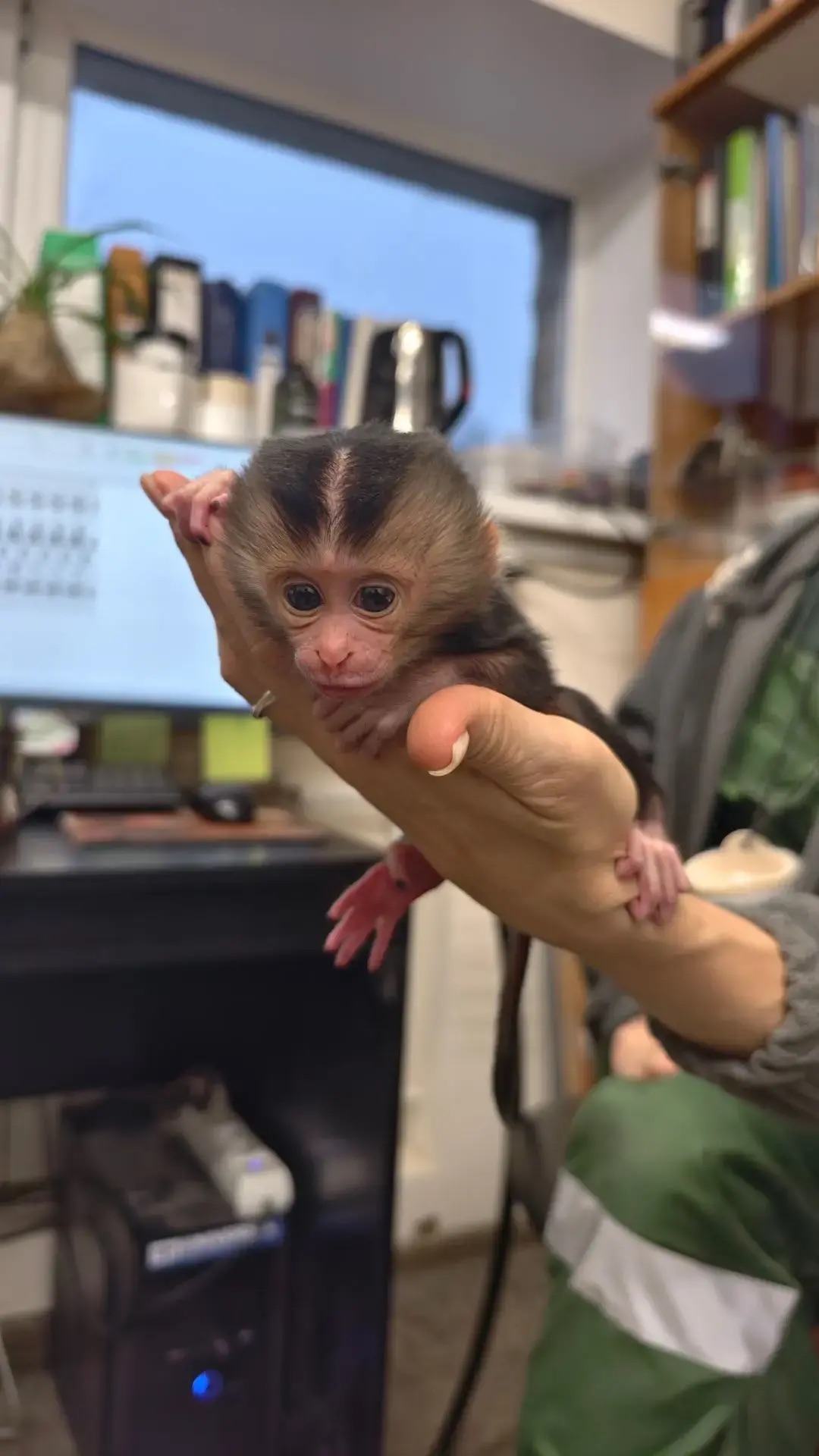
As the zoo noted, methods for how and what to feed baby animals were developed back in the Soviet era. However, for nearly a century, no one considered the main challenge: socialising the animal into its own species group. Modern zoos have set a new goal—to raise an orphan or rejected infant in a way that allows for a seamless return to their family troop. The whole world watched the struggles of Panchu, a rejected macaque infant in Japan, when he was introduced to his peers: initially an outcast, he endured a constant "disciplinary process" before his relatives finally accepted him as one of their ow.
"We have never reintroduced macaques to their family group in our zoo before, so this is completely new territory for us," Natalia Filatova, Head of the Primates Department at the Leningrad Zoo, commented to Fifth Channel.
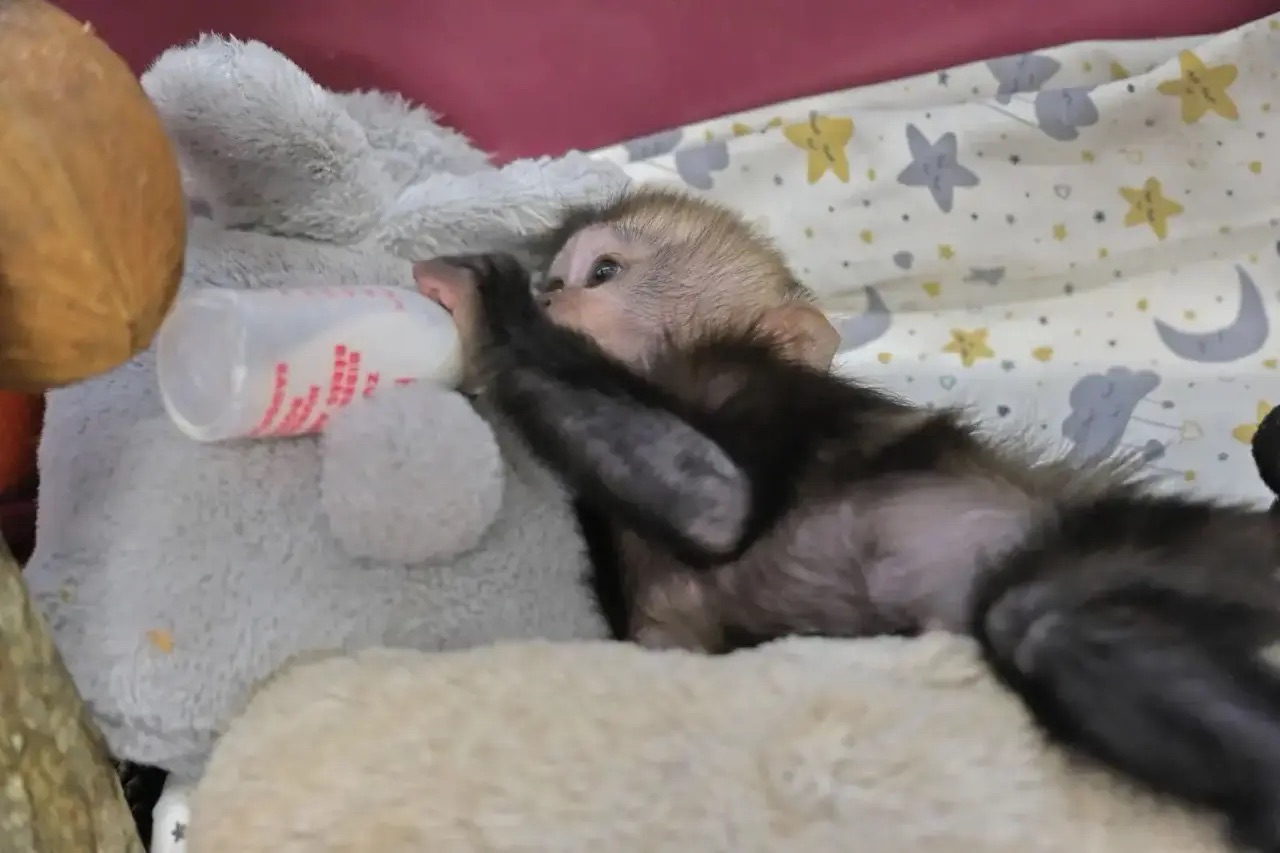
A faux-fur heating mitten with a warm bottle inside, which she clung to, replaced the little one's motherly warmth.
"The mitten was on a string. We would hang the heating pad with the macaque around our necks and carry her on ourselves. This is a kind of mother mimicry. Right after birth, a baby immediately clings to the mother's fur, and no matter how the mother jumps, the baby will never fall. So, we encouraged this behavior. We also purposely turned her in all different positions. When we walked, we mimicked jumping. This is crucial for the development of a macaque's vestibular system. The little one probably perceives the mitten more as something safe. Maybe not even as a mother, but as an environment where she knows nothing bad will happen to her," shared Natalya Budaragina, a zootechnician in the Primates Department.
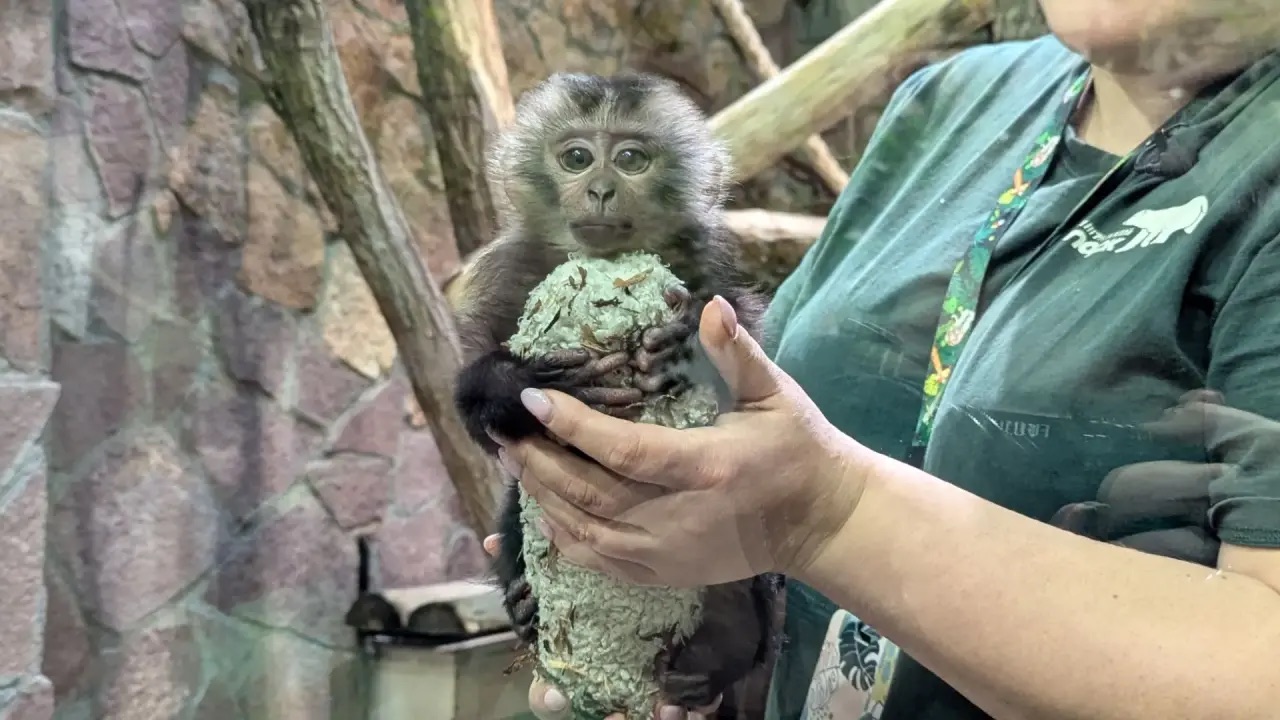
During her first days, the newborn macaque was fed every one to two hours. Gradually, the intervals between feedings grew longer. On her 12th day, the little one’s first teeth erupted, and adult foods were introduced to her diet: fruits, vegetables, meat, insects, and cultured milk products. By the age of three months, the Leningrad Zoo's new rising star weighed 850 grams.
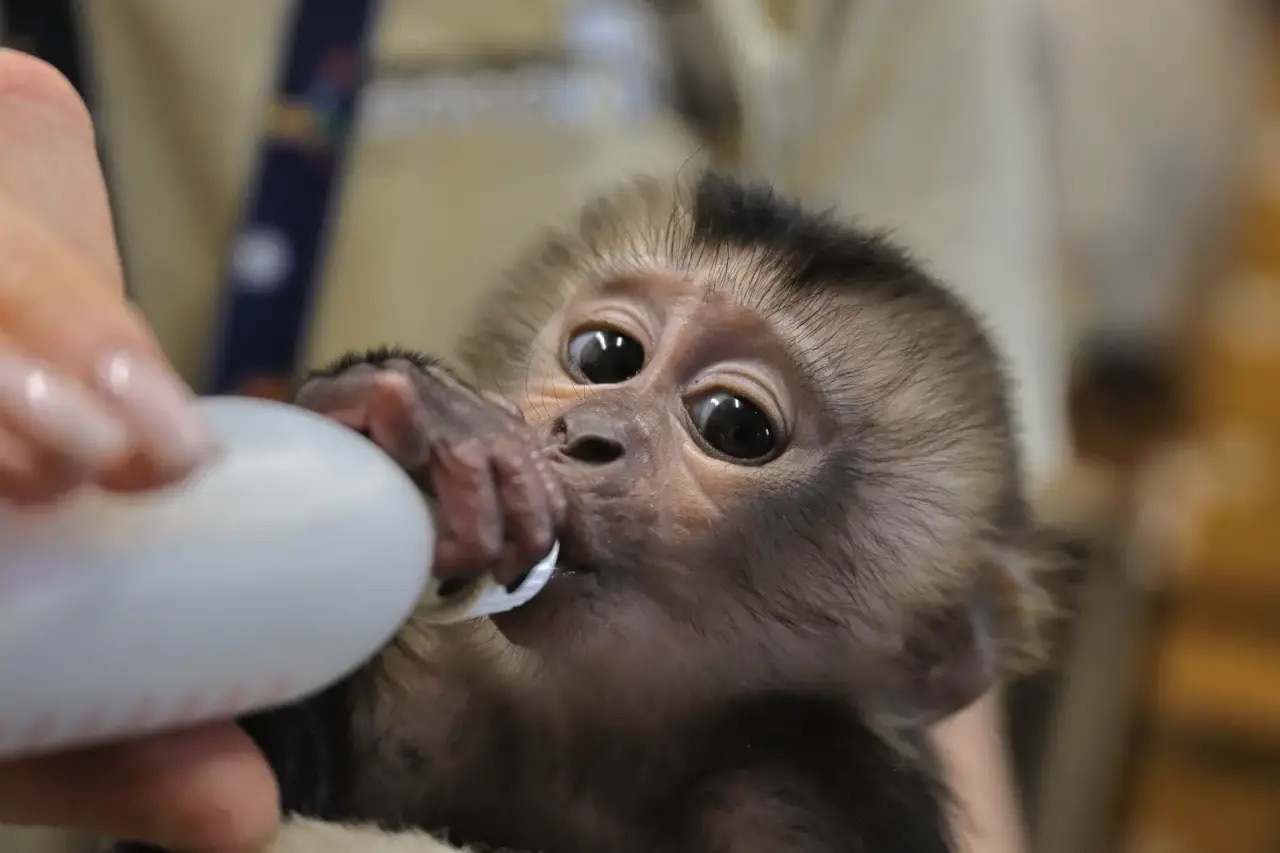
"She is growing rapidly—by the day, by the hour, you could say. She is fascinated by the whole world. She finds everything interesting. She’s curious and active," the zootechnician noted.
Now, the little one prefers solid foods. She has even developed some favorite treats. "She loves cottage cheese. She likes fruits, of course, but she doesn't care for bananas. And she isn't a big fan of meat," shared Natalya Budaragina.
The charming, fluffy little one captured the hearts of many. When the time came for a very important milestone—naming the baby—the zoo launched a contest for its followers, who left nearly a thousand comments featuring 506 unique names. Based on the little macaque's personality and traits, the staff of the Primates Department chose the name Jaya (meaning victory or triumph) from the shortlist.
The sweet little one’s interaction with her family never stops. Initially, the baby was brought out in a carrier and placed near the enclosure mesh, which ensured her safety while allowing the little one to observe macaque behaviors and learn her species' language.
Socialisation is progressing gradually. A couple of months after her birth, Jaya began going out for walks. First in a small enclosure, and later in a large one, which was furnished with trees and other plants. For the two-month-old monkey, who occupied the enclosure alongside her keeper, these were completely new sights and smells, as well as an opportunity for physical activity and interacting with her family through the glass. Her adult relatives observe her with interest. According to specialists, their reaction is not aggressive, which is already a good sign.
"They see her every day and understand that she is a baby from their troop. Although, I must say, macaques of other species watch her too, and they are just as charmed by her as we are," Natalia Filatova noted.
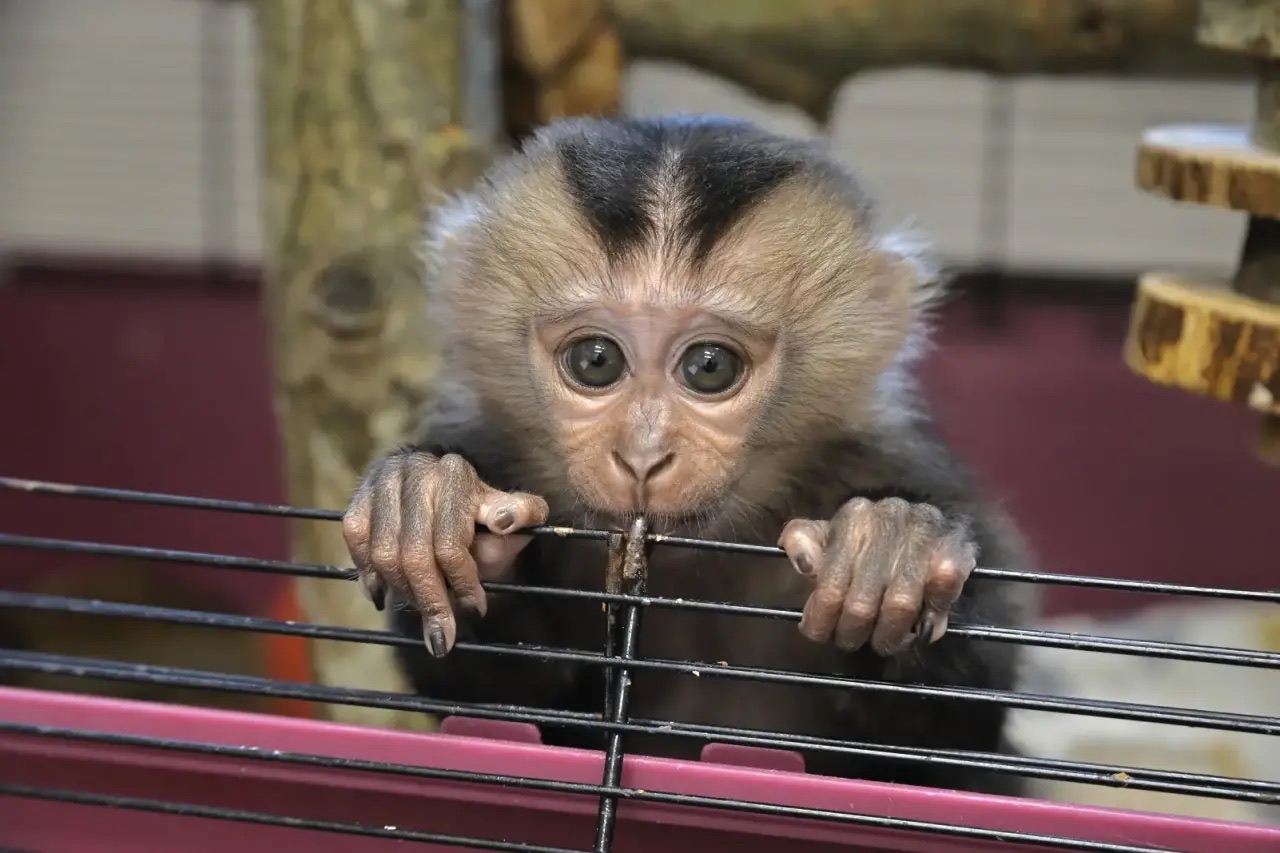
At five months old, the growing Jaya has become even fluffier and more active. The restless little one was recently moved to a large enclosure right next to her parents. A special mesh slide gate with temporary fine netting was installed between the baby and the adult group to prevent the relatives from pulling Jaya's paws through and accidentally injuring her. Most often, it is Charlotte, the baby's mother, who sits by the gate. The other females also drop by to interact. Her father, Daman, visits less frequently: he checks to see that everything is fine and then leaves. However, if the baby lets out a squeak—for example, during a veterinary checkup—the head of the family immediately begins to voice his displeasure toward the zoo staff. Jaya is still a bit wary of her relatives, as they are loud, impulsive, and fond of settling scores with one another. But this does not stop her. She boldly approaches the gate, chatters with her neighbours, and shows a keen interest in them.
The zoo's immediate plans include moving the adult females into a separate enclosure next to Jaya, where they will be able to have more contact with each other. Following that, the staff will introduce the mother, grandmother, and aunt to the baby one by one.
It will be about six months before the first attempts to reunite Jaya with her family take place. During this time, she needs to gradually wean off milk, get used to adult food, and grow stronger, so that in case of danger, she will be able to escape along the branches or stand up for herself
Today, thanks to the keepers, the charming little one already knows her species' language and mimics their movements. Specialists hope that in the future, Jaya will become a fully integrated lion-tailed macaque, capable of mating and giving birth to her own offspring, and that the daily dedication of the Leningrad Zoo staff will be rewarded, serving as a shining example of large primate socialisation.
Photo credit: Leningrad Zoo Press Service